Question: Have you heard of the Varzi family in Italy? If so, let me in the comments below.
For many chefs, the passion for food begins with a person. For me, that person was my Grandpa Varzi. Long before I had a professional kitchen, I had his. From the time I was born until I was twelve, almost every weekend was spent by his side, my small hands dusted in flour, trying to mimic his patient, knowing movements.
He was the keeper of our family’s culinary soul. He taught me the alchemy of turning flour and eggs into silken ribbons of homemade pasta. He shared the patient art of simmering a tomato sauce until it was rich, sweet, and perfect—a “secret” recipe I still cherish. He wasn’t a distant ghost from a photograph; he was my first and most important culinary instructor.
To truly understand the food he shared with me, I knew I had to understand the world that shaped him. His recipes weren’t just instructions; they were stories from his homeland. And so, I traveled to Corropoli, a small town in the stunning Abruzzo region of central Italy, to taste those stories at their source.
Life in Corropoli: The Known Homeland
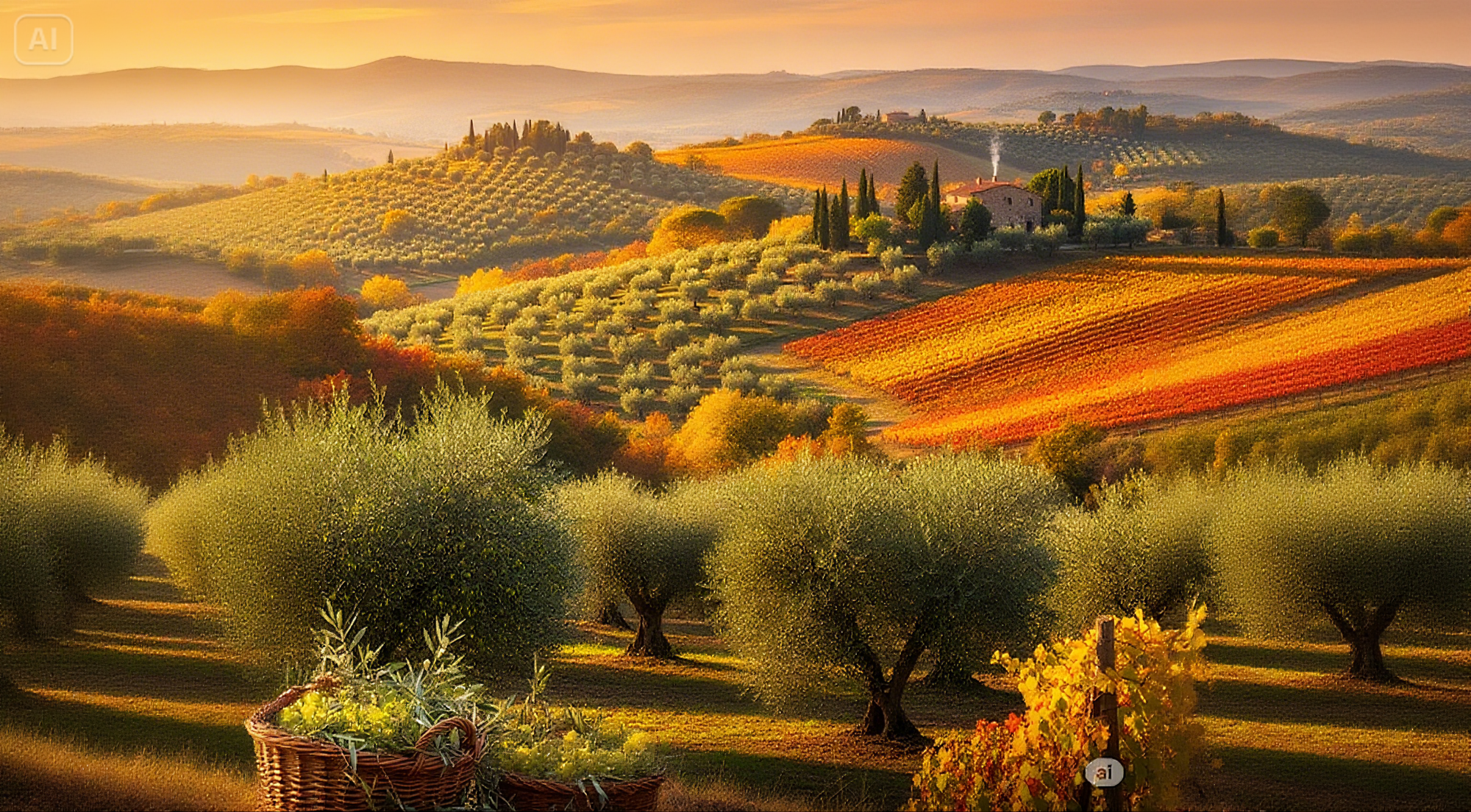
My grandfather’s world was Corropoli, a charming town in the province of Teramo. It’s a land of rolling hills, ancient traditions, and the deep blue of the Adriatic Sea just a short drive away. Walking through its narrow cobblestone alleys, hearing the chime of church bells and the murmur of Italian chatter spilling from a café, I could begin to imagine his life here.

The region’s climate is a classic Mediterranean tapestry. I imagine him finding solace in the damp, cool winters, where temperatures hover between a brisk 5 and 12°C. Spring would arrive as a vibrant explosion, the air warming to a perfect 15-20°C as the hillsides became a riot of wildflowers. Then, the relentless sun of summer, pushing the heat past a blistering 30°C, would make the cool waters of the coast an irresistible sanctuary. But autumn—that would be the season of reward. As the intense heat softened, the air would fill with the earthy scent of the harvest. This is the time of Teramo’s true treasure, its “liquid gold.” The olives, fattened by the summer sun, would be pressed into world-class extra virgin olive oil, like the celebrated Aprutino Pescarese DOP, whose fruity, peppery notes are the very taste of the land—a tradition perfected by producers like Frantoio Montecchia.
The Adriatic Escape: Seeing the Sea Through His Eyes
Corropoli is just a short drive from the coast, and as a boy, my grandfather would have likely walked or biked his way to these shores. Standing on the “Silver Beach” at Alba Adriatica, I tried to see the shore through his eyes. Did he run along this same stretch of sand? Was this expanse of blue the backdrop to his dreams?
The coast is dotted with beautiful beaches like the family-friendly Giulianova Lido and San Benedetto del Tronto, famous for its boardwalk lined with thousands of palm trees. Here, you find both free public areas (spiaggia libera) and private beach clubs (stabilimenti balneari) that offer umbrellas and cafes for a daily fee (€15-€30), which is between $24 – $48 Canadian. The air smells of salt and sunscreen, mixed with the irresistible aroma of fried calamari drifting from a beachside trattoria.
The Flavors of Abruzzo: Tasting the Legacy
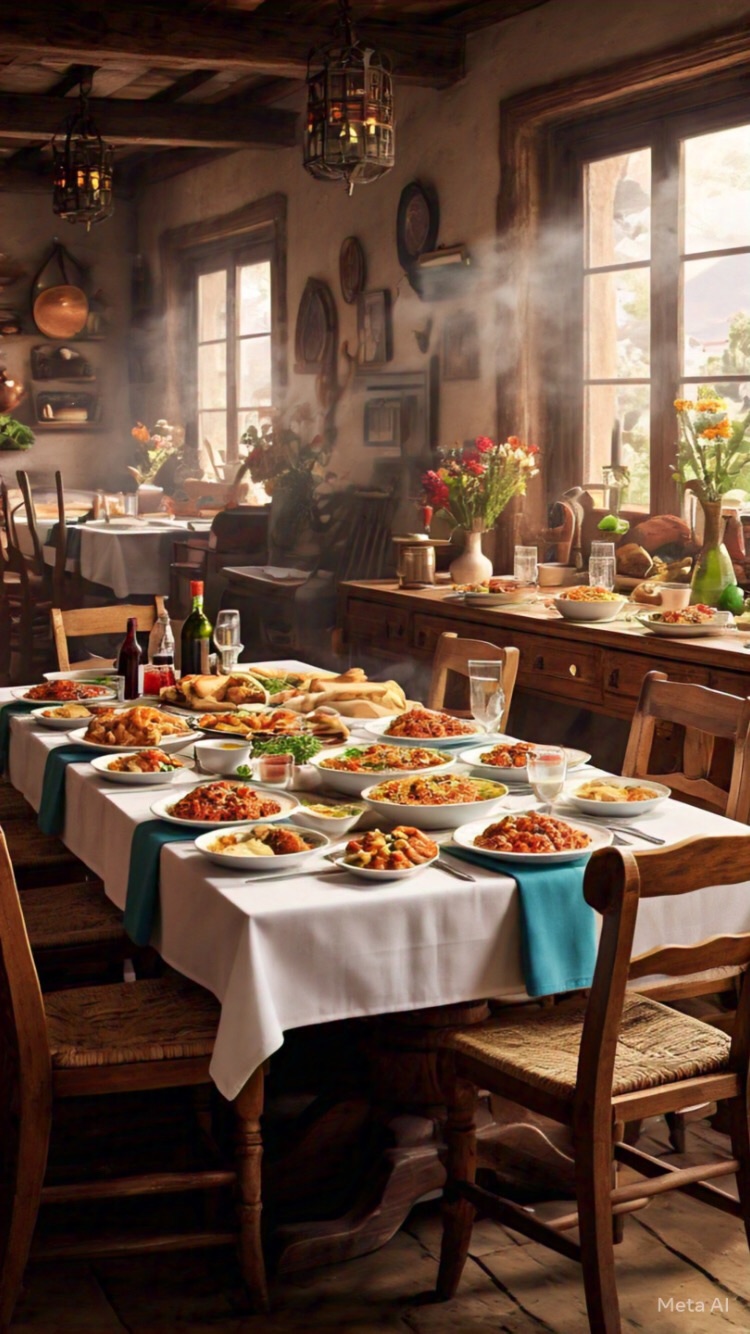
The food of Abruzzo is rustic, honest, and deeply flavourful. It’s the food of shepherds and farmers, and it’s the foundation of everything Grandpa taught me. To taste it here was to connect with him on a profound level. Here are three recipes that capture the heart of the region he came from.
1. Maccheroni alla Chitarra con Ragù d’Agnello (Guitar String Pasta with Lamb Ragù)
Grandpa taught me that pasta is a feeling, not just a measurement. This dish is the emblem of Abruzzo, named for the chitarra (guitar), a stringed box used to cut the pasta. As I ordered it in a small trattoria, I felt like I was completing a circle he started in his kitchen with me decades ago.
Ingredients:
* For the Pasta: 2 cups (300g) “00” flour, 3 large eggs, a pinch of salt, 1 tbsp extra virgin olive oil.
* For the Lamb Ragù: 1 lb (450g) boneless lamb shoulder, 2 tbsp olive oil, 1 onion, 1 carrot, 1 celery stalk, 2 cloves garlic, ½ cup dry white wine, 1 (28oz) can San Marzano tomatoes, 1 sprig rosemary, salt, pepper, and Pecorino cheese.
Method :
* Make the Pasta: Mound the flour, make a well, and crack in the eggs, salt, and oil. Gently beat and incorporate the flour, then knead for 8-10 minutes until smooth. Rest the dough, wrapped, for 30 minutes.
* Start the Ragù: Sauté the finely chopped onion, carrot, and celery (soffritto) in olive oil until soft. Add minced garlic.
* Cook the Lamb: Increase heat, add small cubes of lamb, and brown them. Deglaze the pan with red wine, ( Grandpa Varzi made his own authentic variety, which was so dry, my lips wouldn’t open for day ! Kidding 😂)
* Simmer the Sauce: Add hand-crushed tomatoes and a rosemary sprig. Simmer on low, covered, for at least 1.5 hours until the lamb is tender.
* Cut and Cook Pasta: Roll out the dough. Use a chitarra or hand-cut into thick strands. Cook the fresh pasta in salted boiling water for 2-4 minutes until al dente.
* Serve: Toss the pasta immediately with the ragù, adding a splash of pasta water to loosen the sauce. Serve with a generous grating of Pecorino.
2. Sugo di Pomodoro Semplice (Classic & Simple Tomato Sauce)
This is the foundation, the kind of sauce Grandpa Varzi would have made by the gallon. The secret is simplicity and using the absolute best ingredients.
Ingredients:
* 2 tbsp high-quality extra virgin olive oil
* 2-3 large cloves of garlic, lightly smashed
* 1 (28oz) can of whole San Marzano tomatoes (DOP certified if possible)
* A handful of fresh basil leaves
* Salt to taste
Method:
* Gently heat the smashed garlic in olive oil until fragrant but not brown.
* Add the tomatoes, crushing them with a wooden spoon. Add salt.
* Simmer gently, uncovered, for at least 25-30 minutes to thicken and deepen the flavor.
* Turn off the heat, remove the garlic cloves, and stir in torn fresh basil.
3. Arrosticini (Grilled Lamb Skewers)
This is the quintessential street food of Abruzzo. Ordering a bundle of these, hot off a charcoal grill, felt like a true communion with his memory. It’s incredibly simple, relying on the pure flavour of the lamb.
Ingredients:
* 1.5 lbs (700g) boneless lamb shoulder or leg, with a good amount of fat
* Salt
* Wooden skewers, soaked in water
Method:
* Cut the lamb into small 1/2-inch cubes.
* Thread the lamb onto skewers, alternating between lean meat and fat.
* Just before grilling over high charcoal heat, sprinkle generously with salt.
* Grill for 2-4 minutes per side until browned but still juicy. Serve immediately.
A Tale of Two Varzis: Lombardy and Sicily
The strongest signal for the Varzi name comes from two distinct places:
1. Varzi, Lombardy: In the north of Italy, there isn’t just a family, but an entire town named Varzi. Nestled in the province of Pavia, this medieval town has roots stretching back to Roman times when it was a stop on an important trade road. It’s famous for its cured meats and, as we discussed, its ancient tradition of wine production. Roman-era winemaking was an art, with vintners using not just grapes but figs and herbs to create unique flavors. Could my family have originated here, taking the town’s name as their own before migrating south?
2. Messina, Sicily: The other hotspot for the Varzi name is the province of Messina in Sicily. This historic port city has been a crossroads of civilizations for millennia. The presence of the Varzi name here opens up an entirely different avenue of history, one tied to the island’s unique and complex past.
The Varzi Enigma: A Deeper History
As I immersed myself in his world, another layer of our family story emerged. The surname “Varzi” is a whisper in Abruzzo. To find its origin, you must travel. The strongest signals come from two distinct places: an entire town named Varzi in Lombardy, famous for its own ancient food traditions, and the province of Messina, Sicily, a historic crossroads of civilizations.
This suggests a history of migration, a culinary map that stretches the length of Italy. Perhaps generations before my grandfather, our family’s journey began on the shores of Sicily before they settled in the hills of Abruzzo. It adds a fascinating layer to the legacy he left behind.
The search for the name’s origin is a journey that is far from over. But I didn’t come to Italy to solve a puzzle. I came to understand a legacy. The ghost of my grandfather isn’t in a single location on a map. I found him in the taste of the local olive oil, in the warmth of the Adriatic sun, and in the rhythm of life in this timeless land. I came to trace a name, but instead, I found my way home.
———————————-
It is highly likely that the name’s spelling was different in Italy. Here’s the probable explanation:
* Varzi is a known Italian surname. It’s a “locative” surname, meaning it likely originated from the town of Varzi in the province of Pavia, Italy.
* Varze is not a typical Italian spelling for a surname.
It was very common for the names of immigrants to be altered or “anglicized” upon arrival in North America. This could happen for several reasons:
* A clerical error made by an immigration official.
* The name was changed to make it easier for English speakers to pronounce or spell.
* The family themselves modified it over time.
Therefore, the most probable scenario is that the original family name was Varzi in Italy, and it was changed to Varze after Tony Varze immigrated. For my family branch, Varze is the correct and established spelling.
Chef Bari




Leave a Reply