Chefs Journal
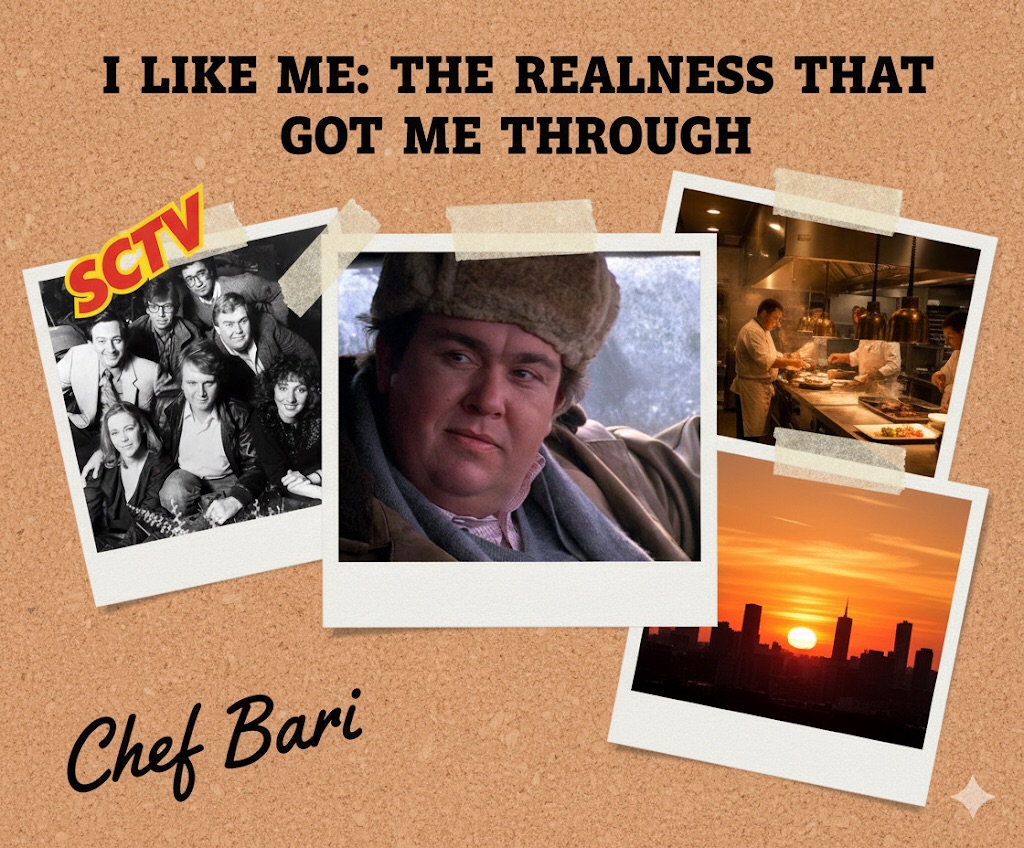
If I bring up the name John Candy, I’m sure every Canadian knows exactly who I’m talking about. But his fame didn’t stop at the border. Through his movies, he soon became a household name all across North America. For me, like for so many others, John Candy and the entire SCTV cast played an important part in my life.
Anyone who’s spent a lifetime in the hospitality business, let alone in the culinary arts, knows the grind. Climbing the ladder to become a chef isn’t just a job; it’s a life you commit to. It means long hours, intense pressure, and a level of stress that seeps into every corner of your world, weighing heavily not just on you, but on your family, too.
My path to the kitchen wasn’t a straight one. I spent the first half of the 1980s working as an architectural and drafting technologist. But in 1986, everything changed. I moved and began a new journey, starting from the ground floor in hotels while simultaneously enrolling in the culinary arts program. The decade from 1986 to 1996 was a blur of climbing that ladder. My days were nights. I’d punch in around 4:00 p.m. and wouldn’t see the outside world again until 2:00 a.m., six days a week. Fourteen, sometimes sixteen hours on my feet. The heat, the pressure, the noise—it was relentless.
In those quiet, early morning hours, I found my release. I’d turn on the TV, and my living room would fill with the brilliant, chaotic genius of SCTV. Of course, at the heart of it for me was often John Candy, but it was the entire lightning-in-a-bottle ensemble that made the magic happen. The inspired madness of Joe Flaherty and Eugene Levy, the incredible characters from Catherine O’Hara and Andrea Martin, the sharp wit of Dave Thomas, Rick Moranis, and Harold Ramis—they were a perfect storm of comedic talent. That show became my ritual, a dose of joy that helped me reset for the next day’s battle.
But the stress from the kitchen wasn’t the only weight I was carrying. My journey into this demanding new career came just a few years after the hardest year of my life. 1980 was the year we lost our daughter, Jenni. To carry that grief into a new, high-pressure profession is something I wouldn’t wish on anyone. In that darkness, laughter wasn’t just a distraction; it was a lifeline.
Even though I never knew him, John Candy’s warmth and genuine humanity always shone through. And as the years went on, his iconic movie roles continued to reinforce that feeling for me. Watching him as the big-hearted, tragedy-struck Del Griffith in Planes, Trains and Automobiles (1987) or as the “Polka King of the Midwest” in Home Alone (1990) was like getting a dose of that familiar, comforting joy.
His humor was more than entertainment; it was a constant reminder of the good-heartedness in the world when my own world felt heavy. And that’s what it all comes down to. In Planes, Trains and Automobiles, when Del Griffith looks Neal Page in the eye and says with such simple, profound honesty, “I like me,” it’s more than just a line in a movie. It’s a moment of pure, unapologetic authenticity. It was that realness—that kind, “I like me” spirit—that truly got me through.
So, next time you’re at your wit’s end from the stress of life, try to remember that. Maybe put on a movie like Uncle Buck and let some of that genuine humor back into your life. It certainly helped me.
Cheers,





Leave a Reply to Japanese “Soufflé” Pancake Recipe – chefbariCancel reply