Mise en Place : The Law of the Kitchen

Everyone knows the image: Chef Ramsay on TV, face purple, veins popping, screaming at a terrified cook while flames roar in the background. It makes for great ratings. But let’s get one thing straight—a lot of that is just theatre.
Don’t get me wrong, the “angry chef” didn’t come from nowhere. Back in the day, I knew chefs who ruled strictly by fear. They threw pans. They burned you with words. It happened. But in today’s world? That doesn’t fly. It’s unacceptable. A real kitchen runs on respect, not volume. And that respect starts with a single, silent rule.
It’s the Law of the Kitchen
The Law of the Kitchen was carried over from the regiment of the French Army during the 19th century . It wasn’t long after that the term “ Mise en Place” became widely known in the kitchen.
Have you ever been curious , what the heck the term “Mise en Place” means?
In my Chefs world, it is the law.
Literally, mise en place is French for “putting in place.”
It sounds simple enough until you’re in the hit on a busy Saturday night. It means having every ingredient measured, cut, peeled, and bowled before you even think about twisting the dial to light the stove. It is the razor-thin difference between a smooth service or a disaster that smells like burning butter and frantic sweat. And trust me, there have been times where a young apprentice cook didn’t prepare enough Mise en Place. It’s then, the whole brigade of cooks, chef de Partie, Sous Chefs and Executive Chef feel the pressure.
A smooth running kitchen is like Beethoven’s symphony.
The term originated in France, evolving alongside the brigade de cuisine system in the late 19th century. While the concept existed in various forms, Auguste Escoffier is widely credited with codifying it. He brought military discipline—dragged straight from his time in the French army—into the chaotic kitchens of the Savoy and the Ritz. He realized that for a kitchen to function like a machine, the prep had to be separated from the service. Every station had its responsibilities.
It turned cooking from a frantic scramble into a disciplined assembly line. No more shouting over the roar of the hood vent, just the quiet snap of a clean towel and the sharp, acidic sting of raw onions waiting in perfect rows. Order.

Of course, unless you’re in Chef Ramsay’s kitchen. There, the shouting is just part of the garnish to get the TV ratings up for Hell’s Kitchen. 😂 However— in my kitchen you could hear only the hustle and bustle of a busy kitchen combined with the only shout out word, “ Order Up !” That was it.
Alas — before you go 👇
I know you came here for a recipe, so I won’t leave you without one of the best French Comfort Food , easy to prepare and tastes absolutely delicious.
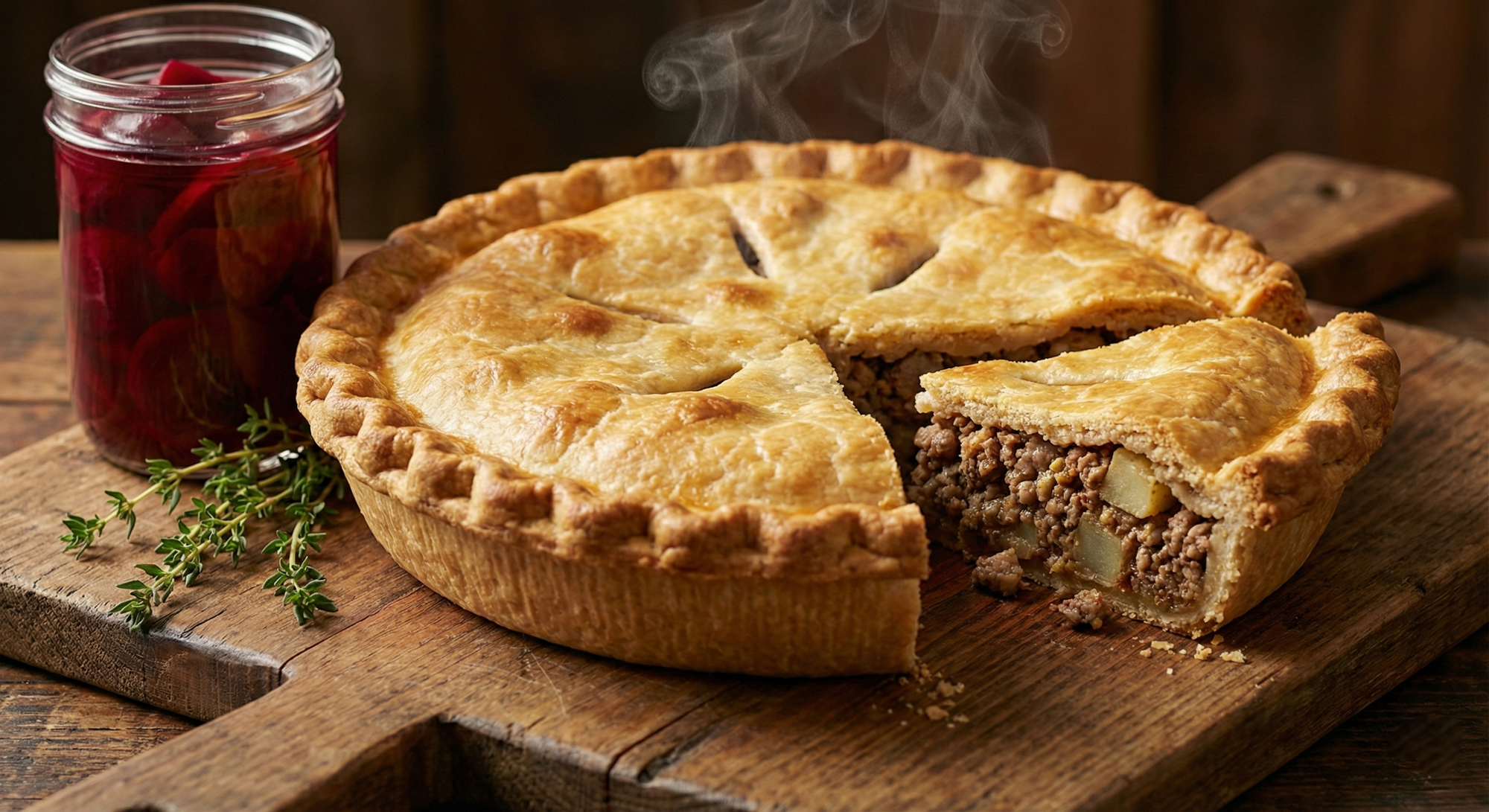
Chef Bari’s Tourtière (The Real Meat Pie)
France might have invented the Tourte, but Quebec perfected it. This is the ultimate winter survival food. It’s heavy, it’s cheap, and it relies on ground pork—which is usually half the price of beef these days.

But here is the trick: The flavor comes from the spices. If you throw them in too late, they taste raw.
Your Mise en Place
Have them measured in a little bowl before you even heat the pan.
Ingredients
• The Meat: 1 lb Ground Pork and 1 lb Ground Beef (or just 2 lbs of pork if the budget is tight).
• The Binder: 1 medium potato (boiled and mashed). This keeps the filling from crumbling apart.
• The Aromatics: 1 onion (finely diced), 2 cloves garlic (minced).
• The Spices (The Mise en Place):
• 1/2 tsp cinnamon
• 1/4 tsp cloves (ground)
• 1/2 tsp savory (if you can find it)
• Salt and pepper to taste
• Tip: Measure these into a shot glass before you start.
• The Liquid: A splash of beef stock or water (roughly 1/2 cup).
• The Crust: 2 pie shells (top and bottom). Store-bought is fine—no judgment here.
• Optional: 1 egg (beaten) for an egg wash to make the crust shine.
Method :
1. The Prep: Boil your potato until soft and mash it. Chop your onions finely. Mince the garlic. Measure your spices into a small glass.
2. The Cook: Get a large pot over medium heat. Toss in the meat and cook and cooked evenly throughout.
3. Add the onion, and garlic. Add the splash of beef stock or water (roughly 1/2 cup) to help it break down into a fine crumble.
4. The Spices: As soon as the onions are transparent add in that shot glass of spices. Stir it well so every grain of meat gets seasoned.
5. The ( low heat ) Simmer: Let it cook down for about 20-30 minutes until the water evaporates and the fat starts to sizzle in the pan.
6. The Mix: Remove from heat and stir in your mashed potato. This combines it all together and it won’t fall apart.
7. Let the mixture cool completely.
Caution: Do not put hot meat into a raw pie shell or the bottom will be soggy.
8. The Bake: Preheat your oven to 375°F (190°C). Fill the bottom shell with the cooled meat mixture. Place the top crust on. Crimp the edges to seal it. Cut a few slits in the top to let the steam escape. Brush with the egg wash if you want to be fancy.
7. The Finish: Bake for 45-50 minutes or until the crust is golden brown.
To Serve:
Serve with beet pickles. It’s the law 😂
Cheers !
Chef Bari
Just so you know, I have kept the same price since Christmas for a limited time – Purchase Canadian Recipes of the Great White North by Chef Bari today !




Leave a Reply